
How Often Should You Pump Your Septic Tank in Massachusetts?
Most Massachusetts homeowners should pump their septic tank every 2 to 3 years, depending on household size, tank size, water use, and whether the home has a garbage disposal. MassDEP recommends pumping at least once every 3 years for homes without a garbage disposal, and every year if a garbage disposal is used.
Regular septic pumping is the simplest way to prevent bigger problems. A missed pumping schedule can lead to slow drains, sewage odors, backups, leach field damage, and expensive system repairs. Complete Septic Service LLC provides septic pumping and maintenance throughout Belchertown, Amherst, Granby, Ludlow, Ware, Palmer, Pelham, South Hadley, Shutesbury, and nearby Western Massachusetts towns.
What Affects How Often Septic Tanks Needs Pumping?
The biggest factors are household size, tank size, and water use. A family of four using a 1,000-gallon tank will usually need pumping sooner than a couple using the same tank. The tank may be the same size, but the amount of wastewater and solids going into it every day is not.
Most Massachusetts homes have septic tanks in the 1,000 to 1,500 gallon range. A typical family of four with a 1,000-gallon tank should plan on pumping every 2 to 3 years. A smaller household may be able to go longer, while a larger household may need service more often.
Garbage disposals also shorten the schedule. Food waste adds solids to the tank and increases the amount of sludge that has to be removed. Water habits matter too. Heavy laundry days, running toilets, leaky faucets, and multiple bathrooms in use can all put extra load on the system.
Older systems may need closer attention as well. Some older tanks have less efficient baffles, no outlet filter, or parts that are harder to inspect. If you are not sure how often to pump your septic tank, your last pumping record and household size are the best places to start.
What Massachusetts Law Says About Septic Pumping
Massachusetts regulates septic systems under Title 5. MassDEP recommends pumping at least once every 3 years, and that schedule can matter when it is time to sell your home. A Title 5 inspection is usually valid for 2 years, but it can be valid for 3 years if the system has been pumped annually and the pumping records are available.
A Title 5 inspection is required before most home sales in Massachusetts. It may also be needed when expanding a property or changing its use. If a system fails inspection, Title 5 allows up to 2 years to complete repairs or an upgrade. That is why regular septic system maintenance matters. Pumping on schedule is much easier than dealing with a failed system, leach field problems, or major system installations and repairs.
MassDEP also warns homeowners not to rely on septic additives as a replacement for pumping. Some additives are allowed if approved by MassDEP, but they do not remove sludge from the tank. The solids still have to be pumped out by a professional.
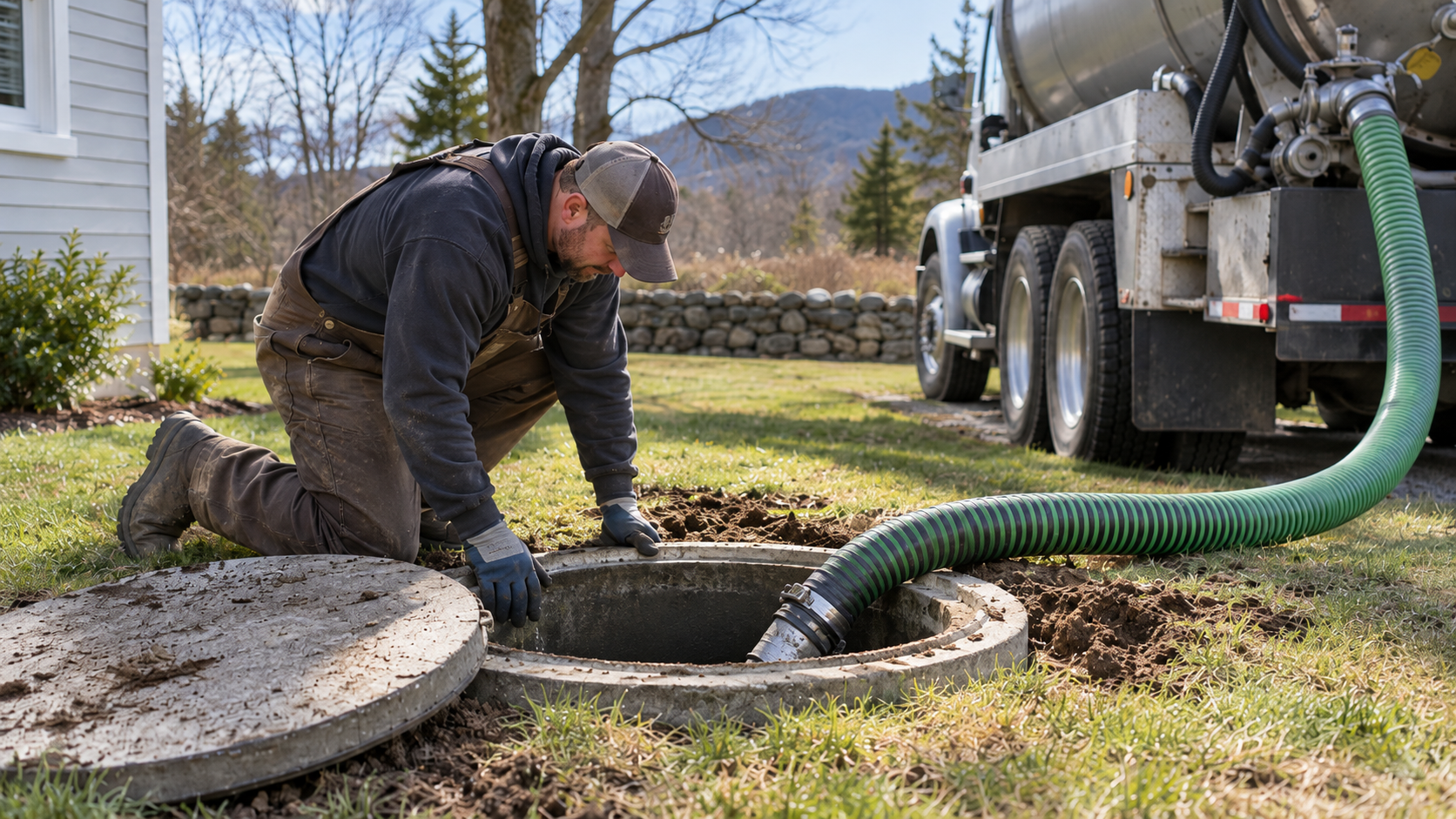
How Much Does Septic Pumping Cost in Western Massachusetts?
Most septic pumping jobs in Western Massachusetts typically range from $250 to $800 or more in Western Massachusetts, depending on tank size, access, how long it's been since the last pumping, and disposal fees. This is not a quote for every home. A technician still needs to know the tank size, location, condition, and service history before giving an accurate number. The brief for this article notes this Western MA range as the cost target to use, while keeping the final recommendation tied to a free estimate.
The cost can go up if the tank has not been pumped in more than 5 years, if sludge has hardened, or if the lid is buried deep below grade. It can also take longer if the tank is far from driveway access or if the homeowner does not know where the tank is located. A routine pumping every few years is usually much cheaper than waiting until the system is clogged, backing up, or damaging the drain field. For a current price on your home, request a free estimate.
Simple Ways to Extend Time Between Pumpings
Good habits can help your septic system work better between service visits. Spread laundry throughout the week instead of doing every load in one day. A sudden rush of water can overload the system and push wastewater through too quickly.
Fix running toilets and leaky faucets as soon as you notice them. A running toilet can send a large amount of extra water into the system every day. Limit garbage disposal use, or avoid it completely if you have a septic system.
Only flush toilet paper. Wipes, paper towels, feminine products, cotton swabs, and other items can clog the system even if the package says they are flushable. The toilet should not be used as a trash can.
Keep grease, cooking oil, coffee grounds, paint, pesticides, and harsh chemical cleaners out of the system. These can interfere with the bacteria inside the tank and add material that does not break down well.
It also helps to know where your septic tank and drain field are located. That saves time during service calls and makes it easier to keep heavy vehicles, sheds, pools, and other structures away from the system. Keep your pumping receipts too. They help you stay on schedule and may matter for Title 5. If you are already seeing problems, review the 7 warning signs your septic tank needs pumping.
Septic Pumping Schedule by Tank Size and Household
Use these as general guidelines. Your actual schedule may change based on tank size, water use, garbage disposal use, and the condition of the system.
1 Person, 1,000-Gallon Tank
With one person in the home, a 1,000-gallon tank may be able to go 5 to 6 years between pumpings. Water use is lower and solids build up more slowly. Even then, MassDEP still recommends regular attention and pumping at least every 3 years for most systems.
2 People, 1,000-Gallon Tank
A couple with a 1,000-gallon tank should usually plan on pumping every 3 to 5 years. If water use is high, if laundry is heavy, or if a garbage disposal is used, move closer to every 2 to 3 years.
Family of 4, 1,000-Gallon Tank
This is one of the most common situations in Hampshire County and surrounding Western MA towns. A family of four with a standard 1,000-gallon tank should usually pump every 2 to 3 years.
Family of 4, 1,500-Gallon Tank
A larger tank gives the system more room. A family of four with a 1,500-gallon tank may be able to go 3 to 4 years between pumpings if water use is normal and there is no garbage disposal.
5 or More People, Any Tank Size
Larger households should expect to pump more often. In many cases, every 1 to 2 years is a safer schedule because the system is handling more wastewater and more solids every day.
Home With a Garbage Disposal
MassDEP recommends annual pumping for homes with a garbage disposal. Food waste increases sludge buildup and can shorten the life of the system if the tank is not serviced often enough.
Schedule Your Next Septic Pumping — Free Estimates
If it has been more than 2 to 3 years since your last septic pumping, or if you cannot remember the last time it was done, now is a good time to schedule service. Staying on a regular pumping schedule is one of the most affordable ways to protect your septic system and avoid a costly failure.
Complete Septic Service LLC provides septic pumping throughout Belchertown, Amherst, Granby, Ludlow, Ware, Palmer, Pelham, South Hadley, Shutesbury, and nearby Western Massachusetts towns. Call (413) 323-4327 today or request a free estimate online. Weekday appointments are available Monday through Friday, 7am to 6pm. Emergency septic service is also available when a septic issue cannot wait.
Recent Posts

